Study
The researchers divided the patients into a control group and an experimental group.
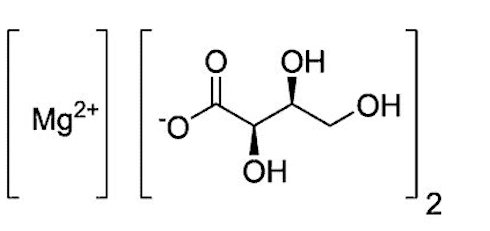
The participants in the control group took a placebo 30 minutes before taking their painkillers. The experimental group took a supplement containing 1.5 to 2 grams of magnesium L-threonate. This amounts to 100 to 130 milligrams of elemental magnesium.
Taking into account the amount of water magnesium threonate can retain, there is no more than 66 milligrams of elemental magnesium in 1 gram of magnesium threonate.
The trial lasted three months.
Results
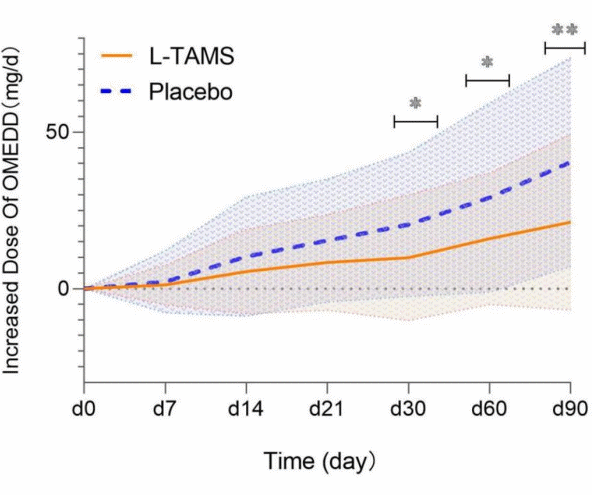
During the trial, the need for opioids increased in both groups, but the increase was half as fast in users of magnesium L-threonate.
After 3 months, the daily dose of opioids in the placebo group had increased by 40 milligrams. In the experimental group, this was 21 milligrams.
Click on the figure below for a larger version.
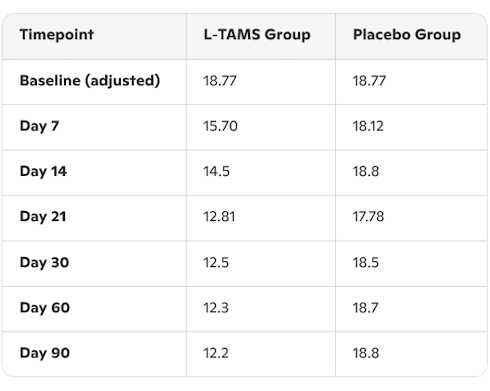
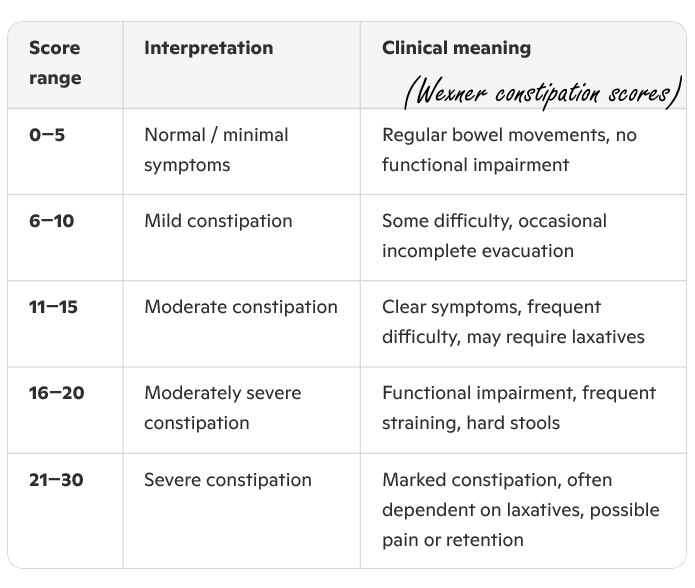
A side effect of opioids is constipation. Doctors determine the severity of constipation using the Wexner Constipation Score.
In the placebo group, the score remained moderately severe during the trial. In the experimental group, the score dropped from moderately severe to moderate.
Mechanism
It is quite possible that magnesium L-threonate also has a mild analgesic effect in people who do not use opioids.
Conclusion
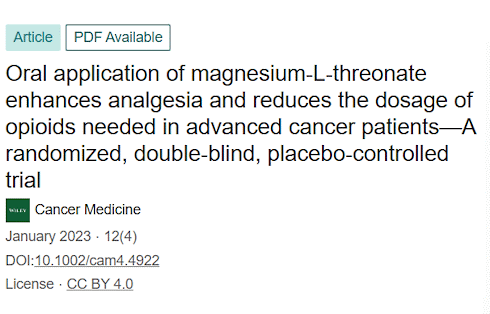
"Safe oral dosage of magnesium-L-threonate can improve the analgesic effect of opioids and reduce the dosage of opioids used in patients with advanced cancer while significantly relieving opioid-induced constipation without significant toxicity or side effects", the Chinese conclude.
"More clinical samples and longer follow-up period are necessary to determine the impact of oral magnesium-L-threonate on opioid tolerance in cancer patients."