Study
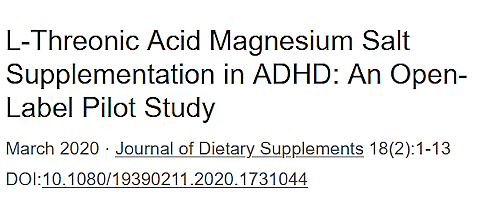
The trial lasted 12 weeks. During that period, the subjects received daily supplements containing the threonate form of magnesium. The doses ranged from 1 to 2 grams per day, divided between a morning and an evening intake.
Taking into account the amount of water that magnesium threonate can retain, there is no more than 66 milligrams of elemental magnesium in 1 gram of magnesium threonate.
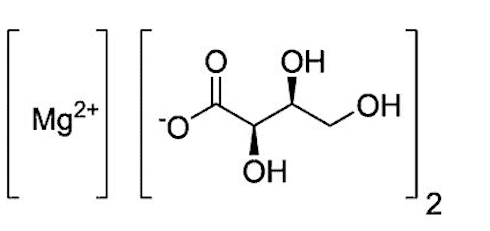
Magnesium threonate
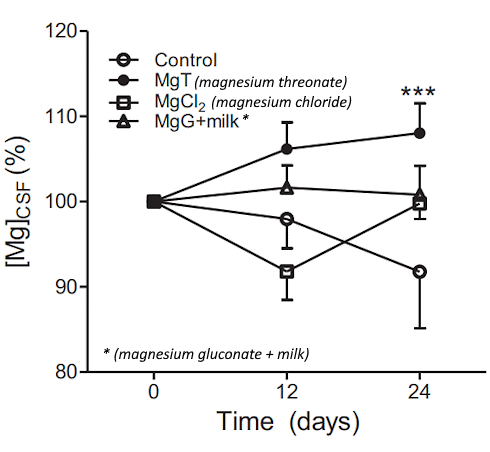
Magnesium has relatively little difficulty entering the brain. The blood-brain barrier allows the mineral to pass through in small amounts. According to an animal study by the Massachusetts Institute of Technology, which appeared in Neuron in 2010, this applies to a lesser extent to the threonate form of magnesium. [Neuron. 2010 Jan 28;65(2):165-77.]
The figure below is from that publication. You can see the effect of supplementation with different forms of magnesium on the magnesium concentration in the cerebrospinal fluid.
Brain cells need magnesium for the production of synapses and growth factors such as BDNF.
Results
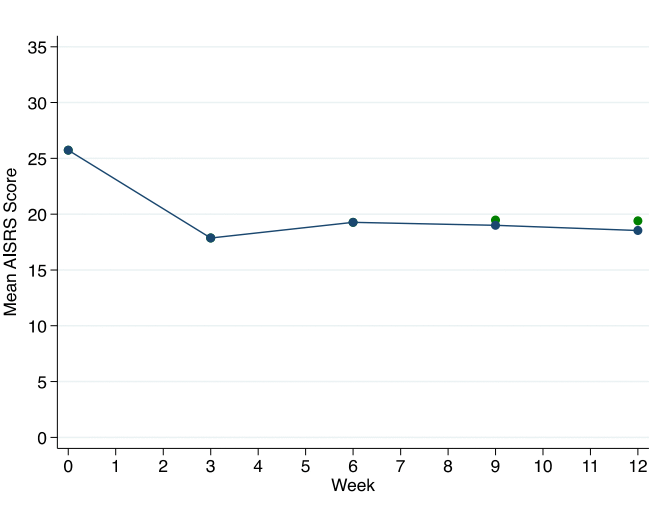
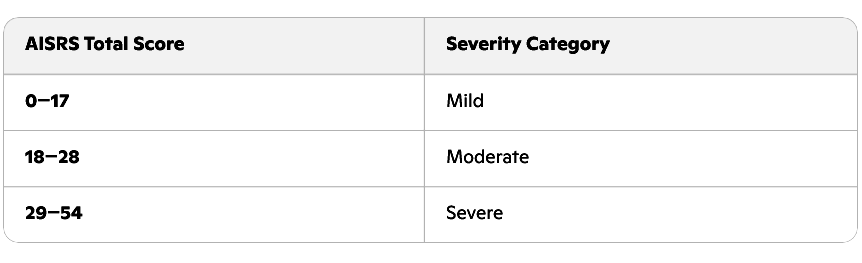
The average subject in this study had an AISRS score of slightly more than 25. This means we are dealing with ADHD at the upper end of the 'moderate' domain. People with this score have difficulty concentrating and planning. They are easily distracted and often restless. They struggle to function but do not yet completely break down.
After the supplementation period, the average score had decreased by slightly more than 6 points. That is a clinically significant improvement. An improvement of this magnitude does not make ADHD disappear, but it does make the symptoms manageable.
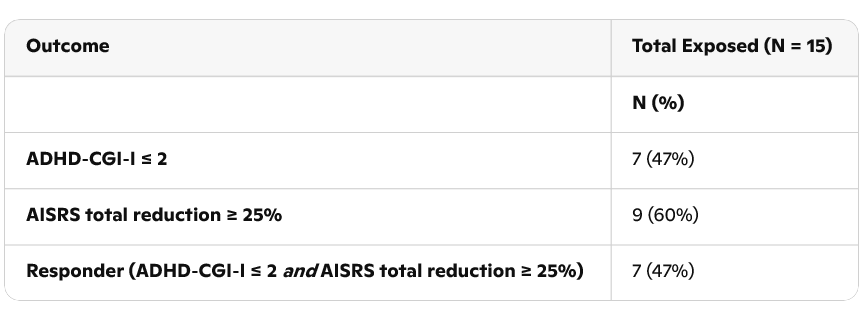
Click on the figure and tables below for a larger version.
Incidentally, supplementation did not work equally well for all participants. The researchers consider half of the subjects to be responders - and the other half therefore not.
Conclusion
"These results support the need to further evaluate this compound in larger samples under double-blind conditions," the researchers write.
Conflicts
The pilot study was funded by Neurocentria, a research company working on magnesium-based neurological medicines.
Neurocentria was founded by the discoverers of the unique properties of magnesium threonate. These discoverers have protected their work with patents [patents.google.com] and market magnesium threonate as a nutraceutical through another company - Magceutics.
The animal study discussed in this web article was conducted by them.