ergo-log.com

Definition: "An ergogenic aid is any substance or phenomenon that enhances performance "

about us

/

contact

/

Ergo-Log


Drinking Salvia officinalis tea results in more HDL and less LDL

If you drink two cups of tea brewed from sage - scientific name: Salvia officinalis - every day, the concentration of 'good cholesterol' HDL rises and the concentration of 'bad cholesterol' LDL in the blood drops dramatically. This is shown in a small trial published in the International Journal of Molecular Sciences.


If you drink two cups of tea brewed from sage—scientific name: Salvia officinalis—every day, the concentration of 'good cholesterol' HDL rises and the concentration of 'bad cholesterol' LDL in the blood drops dramatically. This is shown in a small trial published in the International Journal of Molecular Sciences.


Sage tea
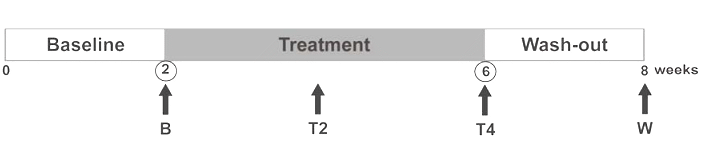
In 2009, molecular biologists from the University of Minho in Portugal experimented with six healthy women aged 40-50. The researchers first followed the women for two weeks and determined a series of blood values ​​during that period.

Afterwards, they had the women drink two cups of sage tea every day for four weeks. During that period, the Portuguese researchers also analyzed the women's blood. There was no placebo group.

Finally, the researchers followed the women for another two weeks. They looked at which effects of the supplementation persisted.

You can see the experimental design clarified in the figure below. Click on it for a larger version.
If you drink two cups of tea brewed from sage—scientific name: Salvia officinalis—every day, the concentration of 'good cholesterol' HDL rises and the concentration of 'bad cholesterol' LDL in the blood drops dramatically. This is shown in a small trial published in the International Journal of Molecular Sciences.


If you drink two cups of tea brewed from sage—scientific name: Salvia officinalis—every day, the concentration of 'good cholesterol' HDL rises and the concentration of 'bad cholesterol' LDL in the blood drops dramatically. This is shown in a small trial published in the International Journal of Molecular Sciences.


Sage tea
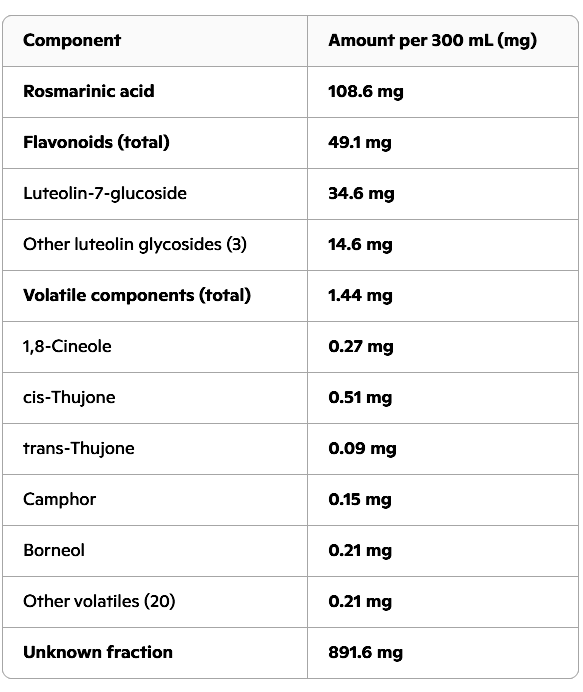
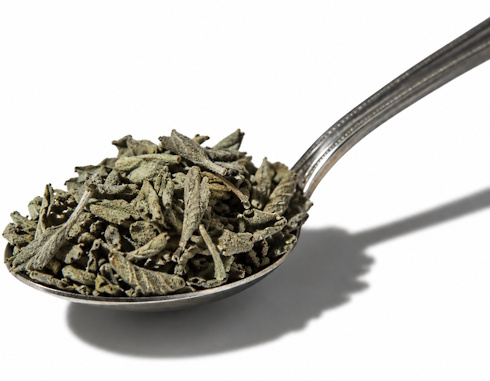
The women made their sage tea themselves. For each cup of tea, they steeped four grams of dried sage for 5 minutes in 300 milliliters of hot water. If you use crumbled leaves, this amounts to five to seven teaspoons.

We obtained the data from another publication by the same group of researchers to create the table above. You are looking at an estimate of the amount of potential bioactive substances in a cup of sage tea if you make it the way the test subjects did.

The most obvious bioactive substances in sage tea are rosmarinic acid and luteolin glycosides. Each cup of sage tea contains slightly more than 100 milligrams and nearly 50 milligrams of these, respectively. There are other phytochemicals in sage tea, but the amounts are actually too small to make much of a difference.

If you drink two cups of tea brewed from sage—scientific name: Salvia officinalis—every day, the concentration of 'good cholesterol' HDL rises and the concentration of 'bad cholesterol' LDL in the blood drops dramatically. This is shown in a small trial published in the International Journal of Molecular Sciences.


Results
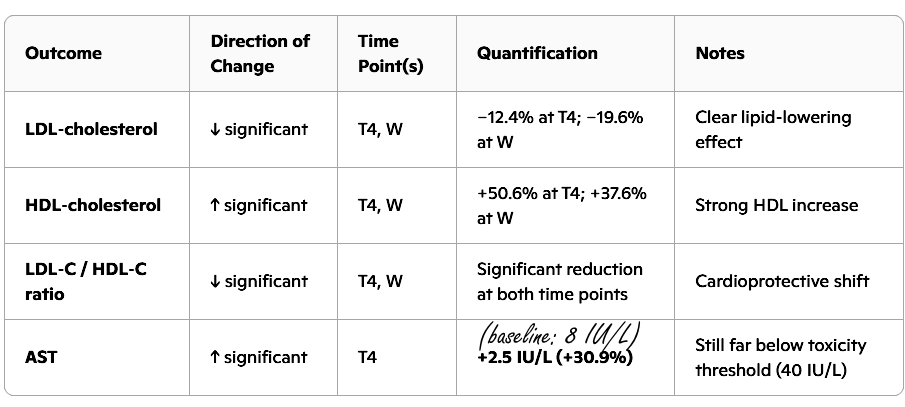
The researchers had expected that sage tea would increase insulin sensitivity. However, this did not happen. However, incorporating sage tea did lower the concentration of 'bad cholesterol' LDL by 12-20 percent and increased the concentration of 'good cholesterol' HDL by 38-51 percent.

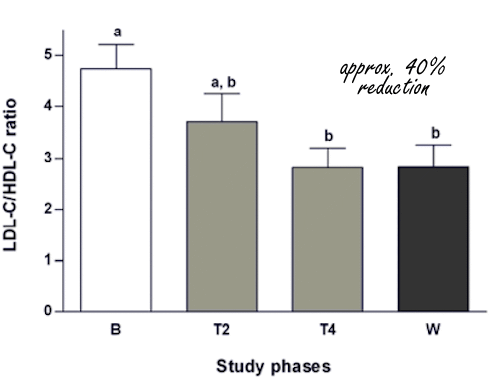
The LDL:HDL ratio dropped by approximately 40 percent. This suggests a reduction in the risk of heart attacks and strokes by a quarter.

The measured effects are superior to the effects of aerobic exercise, weight loss, green tea supplementation, and treatment with fibrates and pharmaceutical doses of niacin.
If you drink two cups of tea brewed from sage—scientific name: Salvia officinalis—every day, the concentration of 'good cholesterol' HDL rises and the concentration of 'bad cholesterol' LDL in the blood drops dramatically. This is shown in a small trial published in the International Journal of Molecular Sciences.


If you drink two cups of tea brewed from sage—scientific name: Salvia officinalis—every day, the concentration of 'good cholesterol' HDL rises and the concentration of 'bad cholesterol' LDL in the blood drops dramatically. This is shown in a small trial published in the International Journal of Molecular Sciences.


The improvement in the LDL:HDL ratio is of the same order as a successful treatment with statins – but without the side effects.

The concentration of the liver enzyme AST increased by 31 percent to 10.5 IU per liter due to sage tea. This indicates that the liver has to work harder, but does not point to toxicity.

More:
Under stress, the brain functions better through supplementation with sage 17.05.2026
Sage extract improves cognition in dementia 17.05.2026
A better memory after just one drop of Salvia oil 01.04.2023

Archives:
Cardiovascular Health


If dietary improvement doesn't lower your cholesterol, try panthetine Eat 2 apples every day, improve your cholesterol More berries, less cholesterol

If dietary improvement doesn't lower your cholesterol, try panthetine
According to a small human study, there is a nutritional trick that may enhance the effect of a cholesterol-lowering diet: supplementation with pantethine.

Eat 2 apples every day, improve your cholesterol
Your cholesterol level isn't alarmingly bad, but it's not really healthy either. In that case, you may well respond to the addition of two apples to your daily diet.

More berries, less cholesterol
A diet with elderberries, aronia berries, cranberries and blueberries could improve cholesterol metabolism.