Study
Based on the answers, the epidemiologists were able to divide the study participants into two groups: a group that experienced intense anger at least once a week and a group that was less frequently burdened by anger.
Subsequently, the epidemiologists were able to follow the study participants for up to nine years. They monitored whether the study participants developed cardiovascular conditions—and whether they died as a result.
Results
After the epidemiologists had eliminated other factors as much as possible, regular anger increased the risk of heart failure by 19 percent. The risk of atrial fibrillation, a common heart rhythm disorder, increased by 16 percent.
The risk of death among the angry study participants was 23 percent higher than in the less angry group.
Click on the figure below for a larger version.
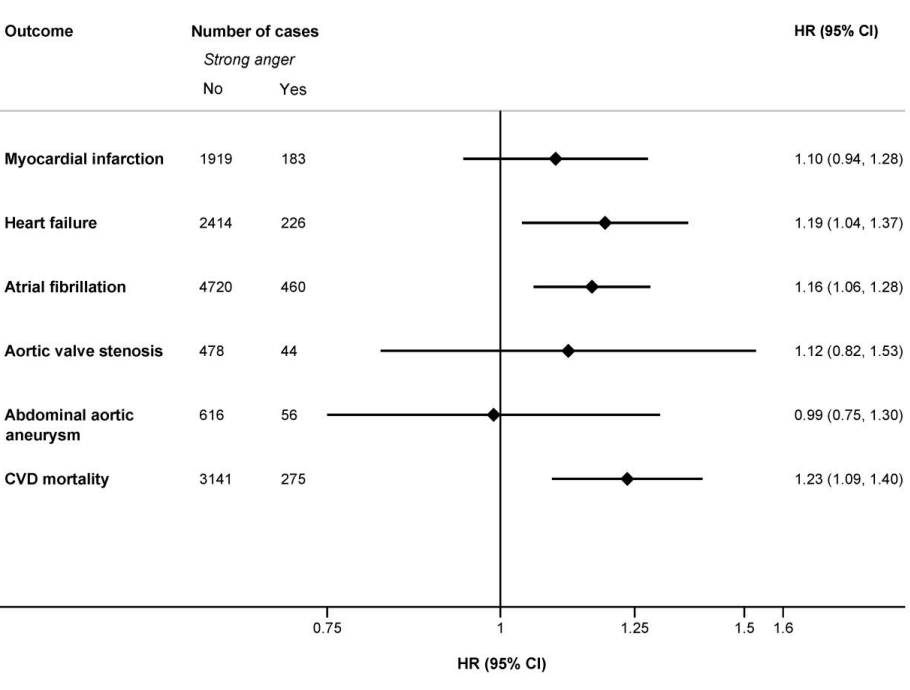

Roughly speaking, the regularly angry study participants in this study had a 9 percent chance of dying from a cardiovascular cause. Among the study participants who went through life less angry, that was 7.3 percent.
Even higher
In a sensitivity analysis, the epidemiologists repeated their calculations, but this time excluding the study participants who already had a heart or vascular condition when completing the questionnaire. At that point, the negative effect of anger became slightly higher. The increase in the risk of death from heart or vascular disease rose to 28 percent among the angry study participants.
Mechanism
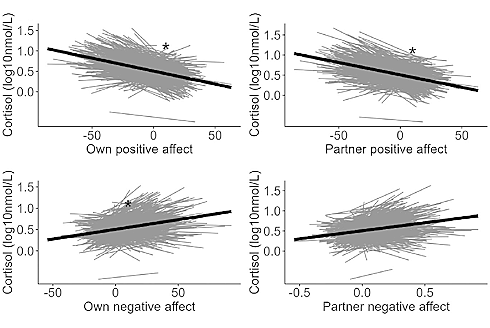
The researchers believe that the stress hormone cortisol plays a key role in the link between anger and death. Anger increases cortisol levels [Brain Behav Immun. 2010 Feb;24(2):215-9.] - and elevated cortisol levels, in turn, increase the risk of cardiovascular mortality. [J Clin Endocrinol Metab. 2010 Nov;95(11):4959-64.]
Conclusion
There are quite a few angry people walking around. The big problem with that anger is that there are simply many excellent reasons for frequent outbursts of rage. Angry people are often people who are simply paying close attention and can still think for themselves.
For all those alert angry people, it is good to know that the negative effect of anger is of the same order as stress, but fortunately much smaller than that of smoking or diabetes.