Study
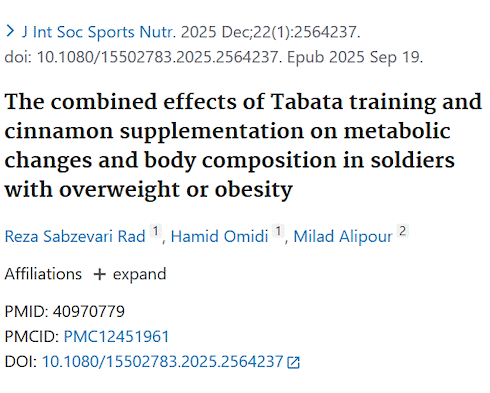
The researchers divided the soldiers into 4 groups.
A control group [C] did absolutely nothing during the trial. Incidentally, that trial lasted 8 weeks.
A first experimental group [T] performed circuit training 3 times a week. Each training session consisted of 8 circuits for 8 exercises – jump squats, back extensions, crunches, push-ups, triceps dips, side crunches, military press with medicine ball, and chin-ups.
Each circuit was set up according to the Tabata principle of 20 seconds of exertion and 10 seconds of rest. It was therefore essentially interval training. After each circuit, the subjects rested for 1 minute.
A second experimental group [S] took a capsule containing 500 milligrams of cinnamon with every meal during the trial. That is about a fifth of a teaspoon or a pinch. So, this group consumed 1500 milligrams of cinnamon daily. That is slightly more than half a teaspoon. In theory, that should be enough to lower glucose levels.
A fourth group [T+S] combined interval training with cinnamon supplementation.
Results
Although the subjects did not change their diet, the experimental groups lost body weight [BM]. This was particularly the case for the group that only trained. They lost nearly 7 kilos on average.
The group that combined training with cinnamon supplementation lost nearly 6 kilos. Apparently, cinnamon supplementation reduces weight loss caused by intensive training.
Click on the tables below for a larger version.

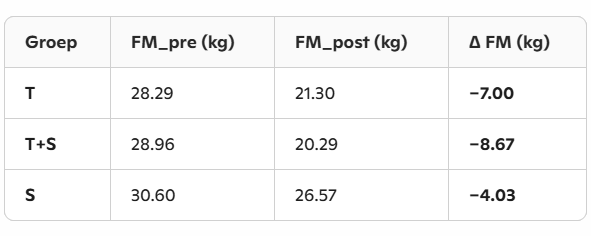
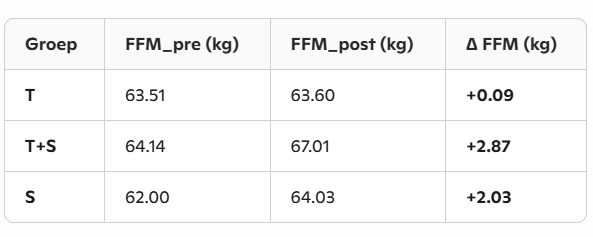
If you calculate with the data from the Iranian study - and look separately at the effect on fat mass [FM] and lean mass [FFM] - the picture changes. You then see that the group that combined training with supplementation lost nearly 8 kilos of body fat and gained nearly 3 kilos of lean mass. The group that only trained lost 7 kilos of body fat but gained no lean mass.
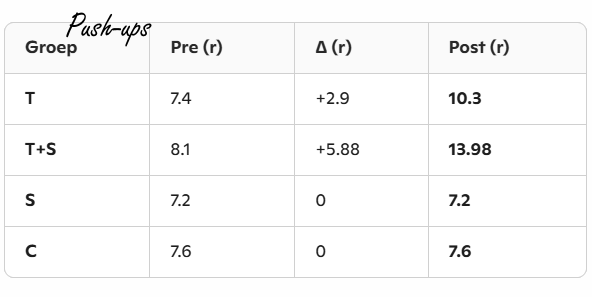
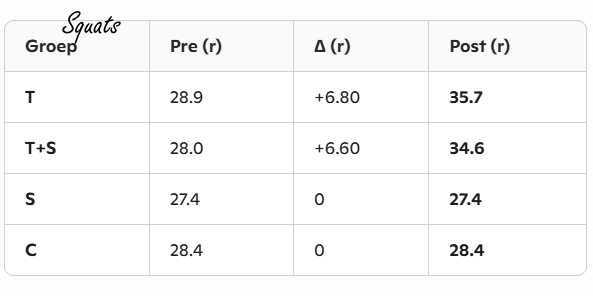
It will not surprise you that the subjects who trained were able to perform more reps on bodyweight squats and push-ups.
Mechanism
The researchers found no clear effect of cinnamon supplementation on insulin function in subjects who trained intensively. They do not believe that insulin has anything to do with the effects of cinnamon on body composition and performance.
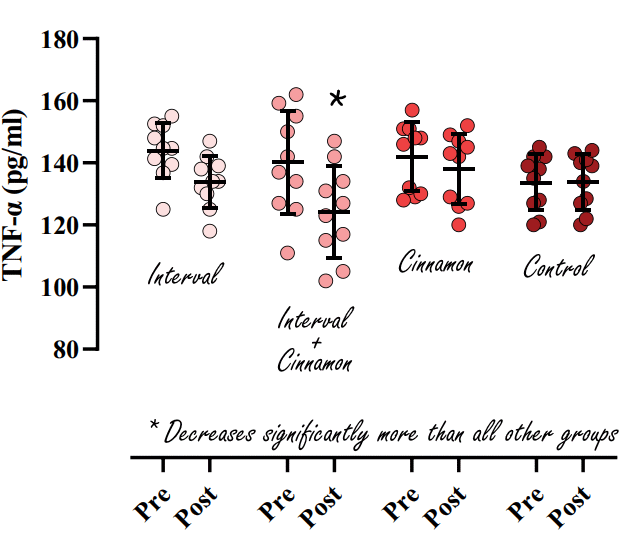
Cinnamon supplementation did, however, cause TNF-alpha to decrease. This might mean that inflammation became less severe, allowing muscles to grow faster.
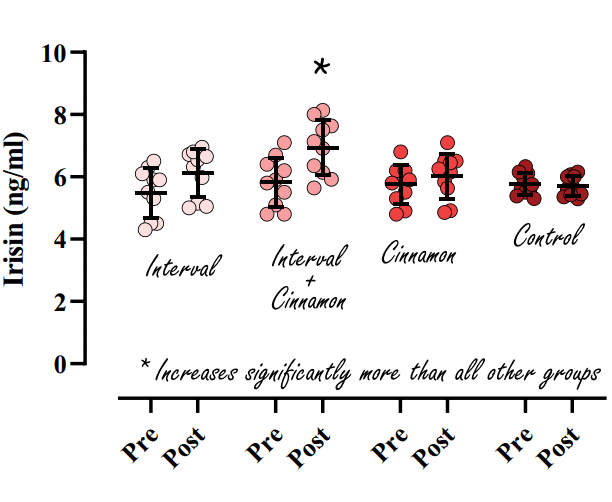
Cinnamon also caused an increase in the release of irisin. This too can contribute to increased muscle growth.
Conclusion
"Tabata training significantly improved body composition, and these effects were further enhanced through daily cinnamon supplementation, suggesting a potentially synergistic intervention for overweight and obese populations," the researchers summarize.