Study
The questions concerned the support the adults received from their religious community, the quality of their relationship with their parents, how connected they felt to their neighborhood or community, and the support and warmth they received from their friends.
This allowed Ong to calculate a 'cumulative social advantage'. "Cumulative social advantage is really about the depth and breadth of your social connections over a lifetime," he explained in a press release. [sciencedaily.com October 5, 2025.]
The researchers extracted white blood cells from the blood, isolated their DNA, and then examined whether methyl groups were attached to crucial genes. Some of these genes keep you young and are deactivated by the methyl groups, while other genes cause inflammation or cell damage and are activated by the methyl groups.
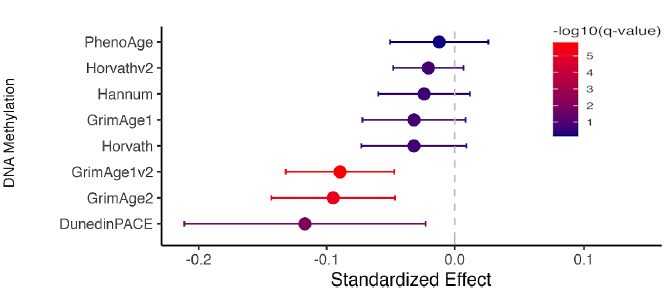
The researchers determined the rate of aging based on DNA methylation using eight different methods.
Results
The more cumulative social advantage the study participants reported, the slower their aging at the DNA level. The effect was particularly clear using the GrimAge and DunedinPace methods.
Conclusion
"These social resources build on each other over time. It's not just about having friends today. It's about how your social connections have grown and deepened throughout your life. That accumulation shapes your health trajectory in measurable ways."
"Think of social connections like a retirement account. The earlier you start investing and the more consistently you contribute, the greater your returns. Our study shows those returns aren't just emotional, they're biological. People with richer, more sustained social connections literally age more slowly at the cellular level. Aging well means both staying healthy and staying connected - they're inseparable."