Study
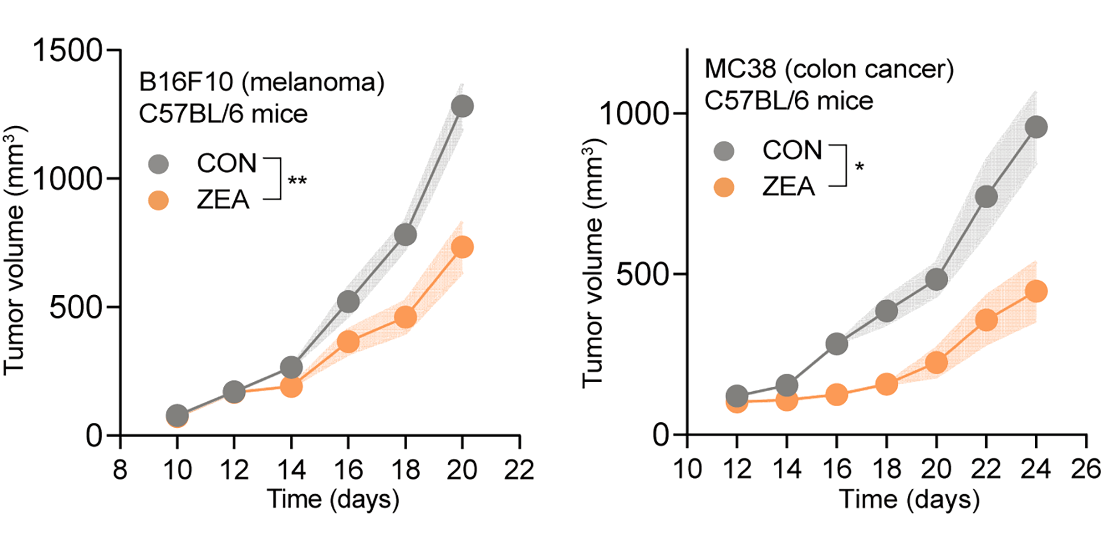
The researchers then tested zeaxanthin in an animal study. They injected lab mice with B16F10 melanoma cells and MC38 colon cancer cells. After ten days, when the tumors became visible, they began supplementing with zeaxanthin.
Results
Supplementation slowed tumor growth. This is shown in the figures below. Click on them for a larger version.
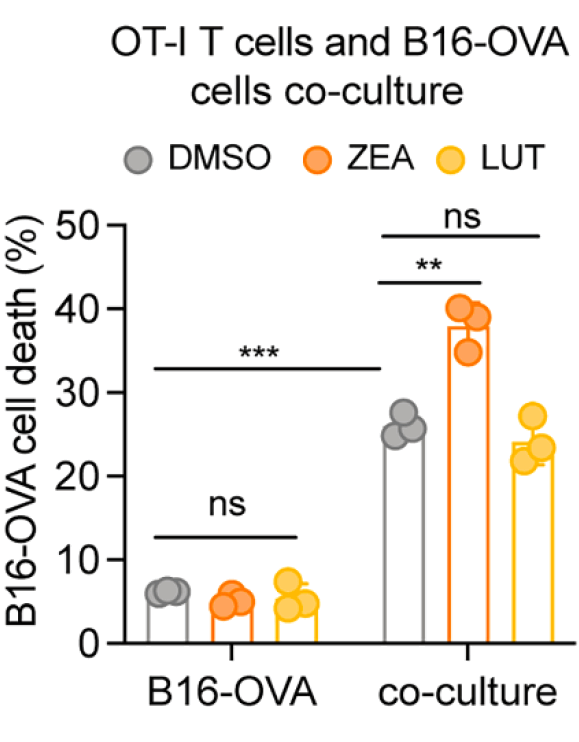
The figure above represents an experiment in which CD8+ T cells (OT-I T cells), which respond to cells that produce ovalbumin, were exposed to cells that produced ovalbumin (B16-OVA). When the researchers also added lutein, it had no effect on the number of B16-OVA cells killed. However, adding zeaxanthin did make the CD8+ T cells more effective at killing tumors.

Mechanism
CD8+ T cells play a key role after vaccination. Those who have been vaccinated against Covid-19 - with wonderful and exremely safe vaccines, of course, we are not allowed to say anything negative about - are increasingly reliant on these immune cells to protect themselves against the ever-mutating SARS-CoV-2. Those who haven't been vaccinated also receive some protection from CD8+ T cells, but primarily from other immune cells, such as Natural Killer cells.
Conclusion
"We were surprised to find that zeaxanthin, already known for its role in eye health, has a completely new function in boosting anti-tumor immunity", says research leader Jing Chen in a press release. [sciencedaily.com October 1, 2025.] "Our study shows that a simple dietary nutrient could complement and strengthen advanced cancer treatments like immunotherapy."
"Our findings open a new field of nutritional immunology that looks at how specific dietary components interact with the immune system at the molecular level. With more research, we may discover natural compounds that make today's cancer therapies more effective and accessible."
Dose?
The researchers only studied a dosage of 500 milligrams of zeaxanthin per kilogram of body weight per day. The human equivalent of that dose is 2-3 grams per day. That's absurdly high. Supplements contain only a few milligrams of zeaxanthin. With a lot of searching, you might find a product with 14 milligrams per daily dose, but that's about it.
We've written about the tumor-inhibiting role of carotenoids before. We can't help but feel that even at lower doses, zeaxanthin - and perhaps other carotenoids as well - stimulate immune cells to eliminate tumors and viruses.