ergo-log.com

Definition: "An ergogenic aid is any substance or phenomenon that enhances performance "

about us

/

contact

/

Ergo-Log

18.05.2025


Creatine makes one fatty liver healthier - but not the other | Animal study

If you have a fatty liver due to unhealthy eating and lack of exercise, supplementing with creatine may very well be a solution. But if you have a fatty liver due to chronic alcohol abuse, you may be better off not taking creatine. This is suggested by an animal study published in Life Sciences in 2022.


Creatine makes one fatty liver healthier - but not the other | Animal study


Study
Brazilian physiologists fed a group of mice fattening food, which caused the animals to develop fatty liver disease. The medical term for such an affected liver is non-alcoholic fatty liver [NAFL].

Another group of mice was fed regular food but consumed alcohol daily. These mice also developed fatty liver disease. In medical jargon, such an affected liver is called alcoholic fatty liver [AFL].

When the livers of the mice were fatty, the Brazilians also gave half of the mice in both groups creatine. The supplementation period lasted 28 days.

If the mice had been adults, they would have received 50 grams of creatine daily. Of course, this dose does not occur in practice.

Results
Supplementation with creatine had a positive effect on non-alcoholic fatty liver. In the non-alcoholic fatty liver of the animals that had been fed high-calorie food + creatine, the researchers found less fat than in the liver of the animals that had only been fed high-calorie food.

Apparently, creatine stimulates fat oxidation by the liver.


Creatine makes one fatty liver healthier - but not the other | Animal study


Creatine makes one fatty liver healthier - but not the other | Animal study


Creatine supplementation moderated the increase in liver enzymes such as AST and ALT in the blood and the increase in TNF-alpha activity. This indicates that creatine made a non-alcoholic fatty liver less unhealthy.

As for the effect of creatine on alcoholic fatty liver, this does not apply.

Creatine supplementation actually increased the amount of fat in the alcoholic fatty liver. Supplementation also enhanced the increase in the enzymes AST and ALT in the blood and the increased activity of TNF-alpha in the liver. Creatine supplementation apparently made the alcoholic fatty liver even more unhealthy.


Creatine makes one fatty liver healthier - but not the other | Animal study


Creatine makes one fatty liver healthier - but not the other | Animal study


Conclusion
"The results of the present study may not be reflected in humans", the Brazilians write.

"The creatine intake in preclinical models is higher than nonsupplemented human diet. Thus, this is also not an alert to people that combine ethanol and food containing creatine."

"This study does however raise the question of whether creatine supplementation and heavy drinking might synergistically promote liver damage in humans. Such a study is warranted."

Source:
Life Sci. 2022 Dec 1:310:121064.

More:
The nootropic effect of creatine | Metastudy 14.04.2025
Creatine makes blood vessels of inactive over 50s healthier 17.01.2025
Creatine accelerates recovery from long Covid 18.11.2023
Creatine supplementation makes the immune system more resistant to infection 08.07.2023
Creatine reduces the need for sleep 18.02.2021

Archives:
Creatine
Liver


How many fresh oranges do you need to degrease your fatty liver? Cardamom oil | Liver protector & life extender? Coffee protects against chronic liver disease

How many fresh oranges do you need to degrease your fatty liver?
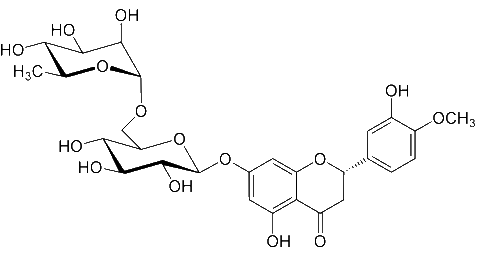
If you have fatty liver, incorporating fresh oranges into your diet can help restore your liver to health.

Cardamom oil | Liver protector & life extender?
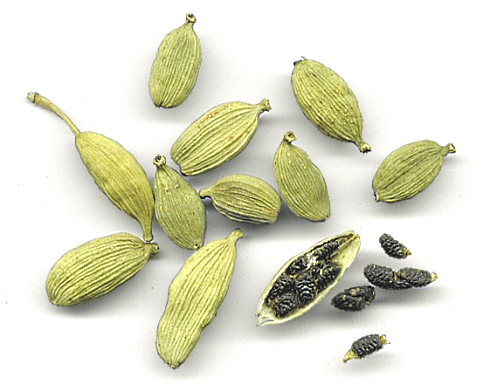
Recently we reported that supplementation with karadamom oil in people with fatty liver improved the glucose and cholesterol balance. What did cardamom oil actually do with the hepatological health of the subjects?

Coffee protects against chronic liver disease
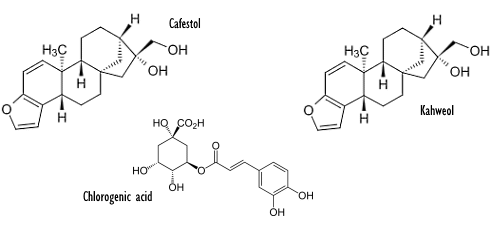
Drinking a few cups of coffee every day reduces the risk of chronic liver disease, British scientists discovered. Regular ground coffee works best.