Study
The researchers divided the patients into an experimental group and a placebo group. The trial lasted eight weeks. During the trial, the subjects in the placebo group took a capsule without active ingredients twice a day.
The subjects in the experimental group received a capsule containing 200 milligrams of bromelain twice a day. This amounts to a daily intake of 400 milligrams. The amount of bromelain can also be expressed in gelatin dissolving units or GDU. In the case of this study, 200 milligrams of bromelain was equal to 500 GDU.
The patients took the capsules around a meal - one hour before the meal or two hours after a meal.
Results
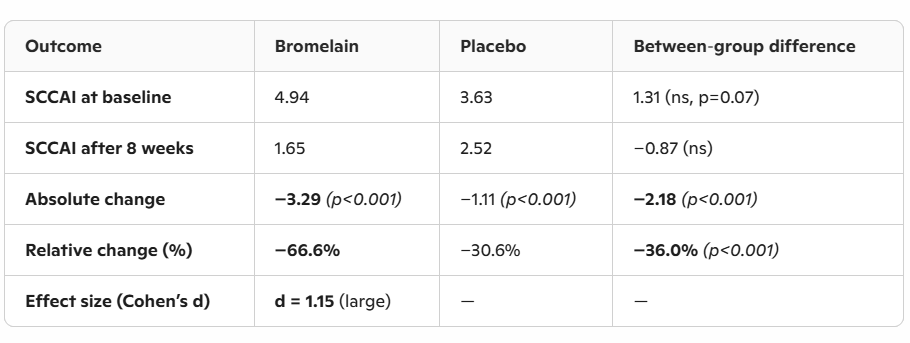
In short, supplementation reduced the severity of ulcerative colitis by as much as sixty percent.
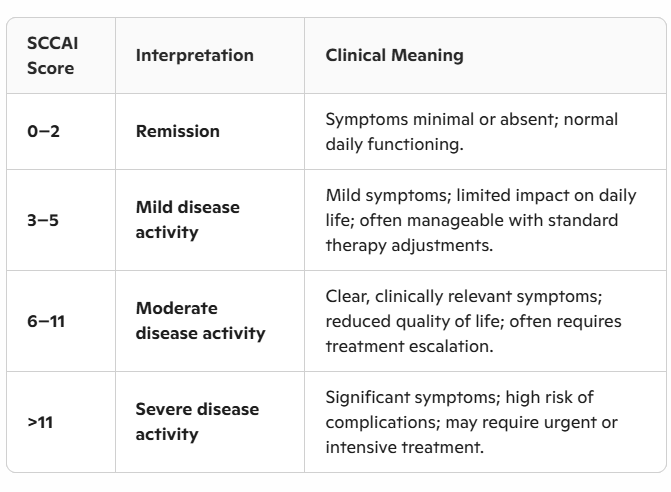
Before supplementation began, subjects receiving bromelain scored 3.3 points higher on the Simple Clinical Colitis Activity Index [SCCAI] than when the supplementation period had ended. In the experimental group, the average score therefore dropped from 4.9 to 1.7. At SCCAI scores below 2, the disease is almost always in remission.
Click on the tables below for a larger version.
Mechanism
Studies have shown bromelain to have a broad anti-inflammatory effect. Among other things, it breaks down receptors for TNF-alpha and thereby inhibits the action of NF-kappaB. As a result, bromelain can attenuate a wide range of inflammatory responses.
Conclusion
"In ulcerative colitis patients, the severity of the disease is reduced by bromelain supplementation, which is an alternative therapy," the Iranians summarize.
"These findings should be considered preliminary and may serve as a basis for future investigations. Further studies with more rigorous designs and the use of clinical and biochemical markers are necessary to accurately assess the true effects of bromelain on disease activity."
You can see the spatial formula of bromelain below.