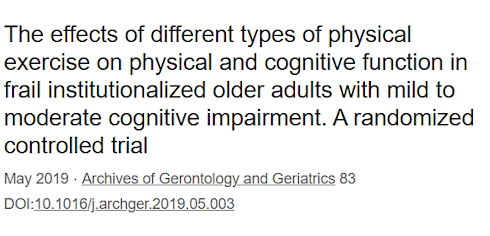
Study
The researchers divided the subjects into three groups.
For twelve weeks, the researchers had the subjects in the TG group perform strength training with resistance bands for one hour twice a week. The subjects trained the muscles in their lower body. They performed exercises for their calves, leg extensions, and leg curls, as well as hip extensions and hip abductions.
The subjects in the MG group also performed exercises for one hour twice a week. They threw balls while seated, performed rhythmic movements, and did game exercises. The exercise intensity was low.
Subjects in the CG group did not exercise physically. They performed cognitive exercises, read texts, or did crafts for one hour twice a week.
Results
Just before the programs began and on the last day of the programs, the participants completed standardized questionnaires regarding their physical health - the SF12 Physical Health - and their mental health - the SF12 Mental Health.
The table below shows how to interpret the scores on the SF. Click on it for a larger version.


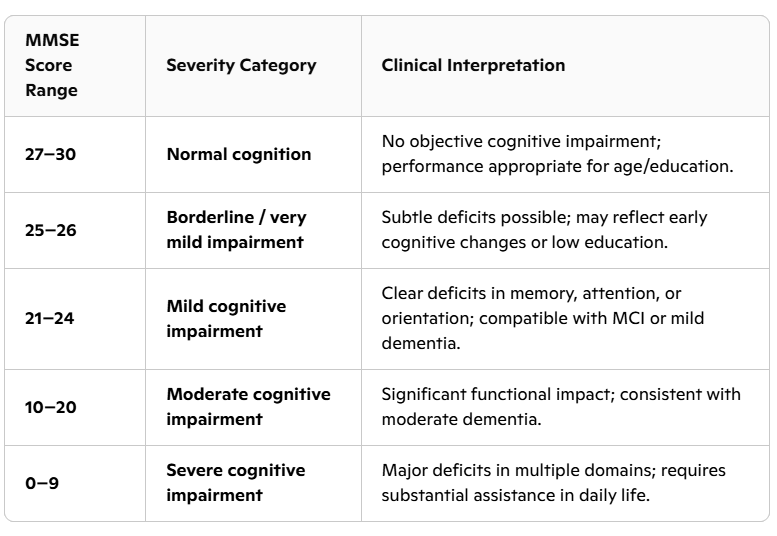
The researchers also tested the subjects' cognitive abilities using the Mini Mental State Examination [MMSE]. The table below explains how to interpret MMSE scores.
You would expect the frail over-75s who participated in the study to lose about two points annually on their MMSE scores.
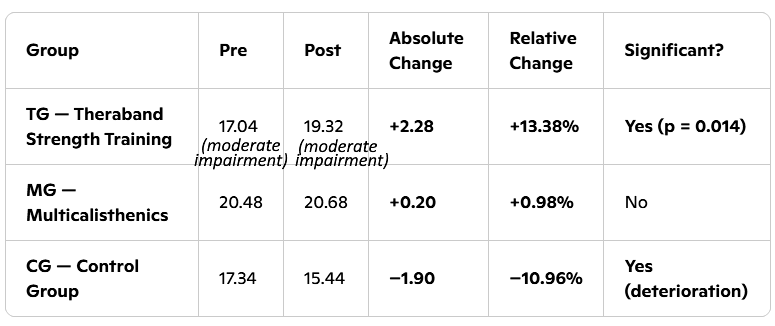
Strength training with resistance bands improved MMSE scores by 13 percent. This means that the decline in mental scores expected over a year was more than offset during a period of 12 weeks.