|
Definition: "An ergogenic aid is any substance or phenomenon that enhances performance "
|
|
||||||||
25.11.2011 |

|
|
Sleep better - live longer
Sleep & health
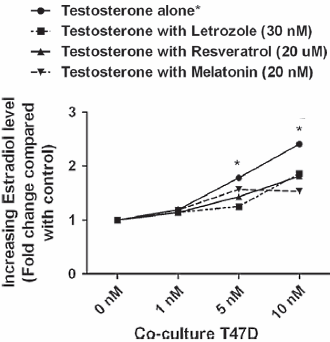
They base their reasoning on studies which have shown that too little sleep reduces the body's maximal oxygen uptake, stimulates overweight and lowers testosterone levels. And that's just a few of the problems associated with lack of sleep.
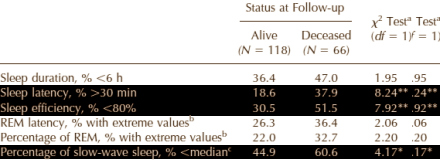
When the researchers compared the over-sixties in the study who had died with the over-sixties who were still alive, they discovered three sleep factors that reduced the chance of dying.
Results
When you get up in the morning you can tell whether you have slept deeply. You aren't properly awake for the first half hour, but after that you feel well rested.
When the researchers corrected their data for the subjects' health, deep sleep disappeared as a contributing factor. Unhealthy people apparently sleep less deeply. But a new factor popped up: REM-sleep. This is the phase when your brain is active and clears up old connections between brain cells and creates new connections. Dreams are probably translations of this electrical activity.

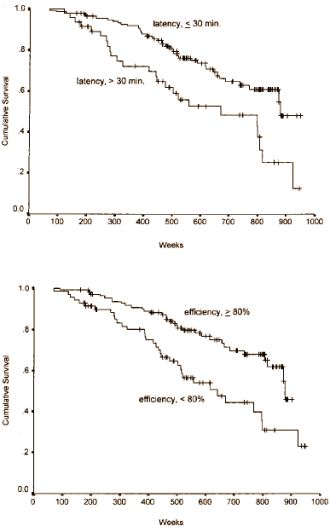

The most important predictor of death that the researchers found was the amount of time it took the subjects to fall asleep. If this was longer than 30 minutes, their chance of dying was higher by a factor of 2.14.
For the subjects who spent more than 80 percent of their time in bed awake, their chance of dying was greater by a factor of 1.93. If they noticeably frequently or infrequently entered REM sleep phases, the chance of dying was greater by a factor of 1.71.
Conclusion
Did anyone there say 'melatonin'?
Source:
More:
|
|
||||||||||||||||