|
Definition: "An ergogenic aid is any substance or phenomenon that enhances performance "
|
|
||||||||
27.08.2010 |

|
|
After Doctor Atkins, now Doctor Bahadori
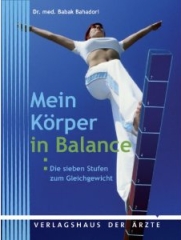
Two years ago the newspapers in Germany and Austria were full of the new diet book by the Austrian doctor Babak Bahadori, [kleinezeitung.at 01.12.2008] [Offline] but the arrival of yet another diet guru went largely unnoticed by the rest of the world. Things may still change though – the results of a small trial suggest that Bahadori's approach works.
Bahadori's diet may not be as famous as Atkins, possibly because he chose to package it in a Seven Step Approach. There are already far too many books on Seven, Nine, Eleven or Thirteen Step Approaches.
The key to Bahadori's approach is that you miss one meal a day, so that in every 24-hour period you fast for 12-14 hours. And in the middle of that fasting period you do your exercise, 3-5 times a week. If you have never done exercise, you build up slowly until you are doing 45 minutes of moderate intensity exercise. This combined with mini-fasting means that more fat is burned.
After training you eat, preferably something containing low amounts of saturated animal fat. You're allowed carbohydrates as long as they don't have a high glycaemic index.
How you do your mini-fasting is up to you. For example, you can miss breakfast, train in the morning and then eat lunch. You can eat as much as you want for lunch. Bahadori doesn't believe in calorie restriction.
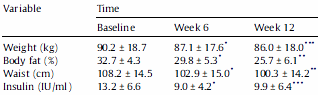
Last year Bahadori published an anecdotal article on the results of a small trial carried out with 34 overweight personnel in a Mexican hospital. Of the participants, 27 managed to keep to the diet for 12 weeks. They lost an average of 4.2 kg. Their fat mass losses were more impressive: the participants lost an average of 7.4 kg fat.
The figures seem too good to be true, but even so they don't truly reflect the potential of his approach, Bahadori writes. "The questionnaires revealed that a number of the subjects were only intermittently compliant with the regimen. This suggests that even better results could be expected in highly compliant subjects."
And lo and behold. When Bahadori looks at the subjects that did stick to his Seven Step Plan strictly, he reports that the most enthusiastic male participant lost a whopping 20 kg fat in 12 weeks, "while proclaiming that he felt so much better on this regimen". There was also a 40-year-old woman who lost 14.1 kg fat.
It sounds more like a promotional text for a diet book than a serious scientific study. And in this case that's ok.
The journal in which Bahadori published his results, Medical Hypotheses, is not a peer-reviewed journal for research results. Medical Hypotheses publishes ideas, theories and hypotheses, not studies. Here's what the Wikipedia entry on Medical Hypotheses says: "Submitted papers are not sent to other scientists for review, but are chosen instead by the journal's editor-in-chief based on whether he considers the submitted work interesting and important." [Wikipedia]
Source:
|
|