|
Definition: "An ergogenic aid is any substance or phenomenon that enhances performance "
|
|
||||||||
01.01.2011 |

|
|
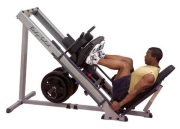
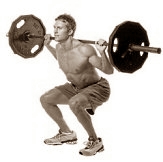
Why squats with 100 kg are heavier than leg presses with 200 kg
The weight you shift with the leg press is a fraction of what you can shift with a squat. Sports scientists at Arizona State University East published formulas in 2004 that you can use to calculate how many kilograms you can use for squats if you know how many you can use on the leg press – and vice versa.
Study
Results
The first graph below shows how many kilograms the beginners could manage with leg presses and squats. The second graph shows the same, but for the advanced athletes. The graph at the very bottom shows the data for all test subjects.
The researchers used statistics to derive a formula from their data, which represents the relationship between the amount of kilograms at which athletes can do 10 reps of each exercise.
Novices: number of kilograms for squats = kg for the leg press times 0.21 plus 36.
Advanced: number of kilograms for squats = kg for the leg press times 0.31 plus 19.
Everyone: number of kilograms for squats = kg for the leg press times 0.35 plus 2.
Conclusion
Source:
More: Archives:
|
|
||||||||||||||||