|
Piperine causes muscles to burn more glucose and fat during exertion, suggests animal study
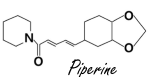
Athletes know piperine mainly as a substance in peppercorns that boosts the uptake of all sorts of other interesting substances. But, in fairly low doses, piperine itself may also enhance sports performance, according to an animal study that South Korean sports scientists at Konkuk University published in Nutrition & Metabolism.
Study
The researchers got mice to run on a treadmill for an hour a day over a period of three days. The intensity was about 70 percent of the mice's VO2max. Half of the mice were given piperine orally [EP] half an hour before the running session; the other half received nothing.
The dose the Koreans used is remarkably low. The human equivalent of this for someone weighing 80 kg would be 40 mg. That amount of piperine is found in 1.3 g white or black pepper. [Comprehensive Reviews in Food Science and Food Safety, 22 November 2016, vol.16, pp 124-40.]
Results
After the running session the researchers observed in the mice that had been given piperine [EP] an increased synthesis of the proteins GLUT4 [transports glucose into cells], MCT1 [involved in the burning of lactic acid], CD36 [involved in the uptake of fatty acids], CPT1 [involved in fat burning] and CS [an important enzyme in the citric acid cycle].


Piperine had no effect on the immune system, but the researchers did observe lower levels of endogenous antioxidants in the muscle cells of the mice that had been given piperine after their treadmill session. It seems that piperine activated mechanisms that led to fewer radicals being generated by the physical exertion.

Whether piperine actually improved the mice's performance capacity? The Koreans are silent.
Mechanism
"AMP-activated protein kinase (AMPK) is an enzyme that controls key players of metabolic pathways, such as glycolysis and fatty acid oxidation," the Koreans wrote. "Although we did not evaluate AMPK signaling in this study, piperine may regulate the AMPK pathway, as shown in previous reports."
Conclusion
"In conclusion, our findings suggest that piperine improve beneficial energy metabolism during exercise by regulating carbohydrate/fat metabolism without stimulating the innate immune response or superoxide generation."
"Therefore, piperine may have applications as a nutritional supplement for improvement of exercise ability."
Source:
Nutr Metab (Lond). 2017 Jul 4;14:43.
More:
Piperine makes curcumin more effective 29.04.2014
Archives:
Endurance Supplements
|